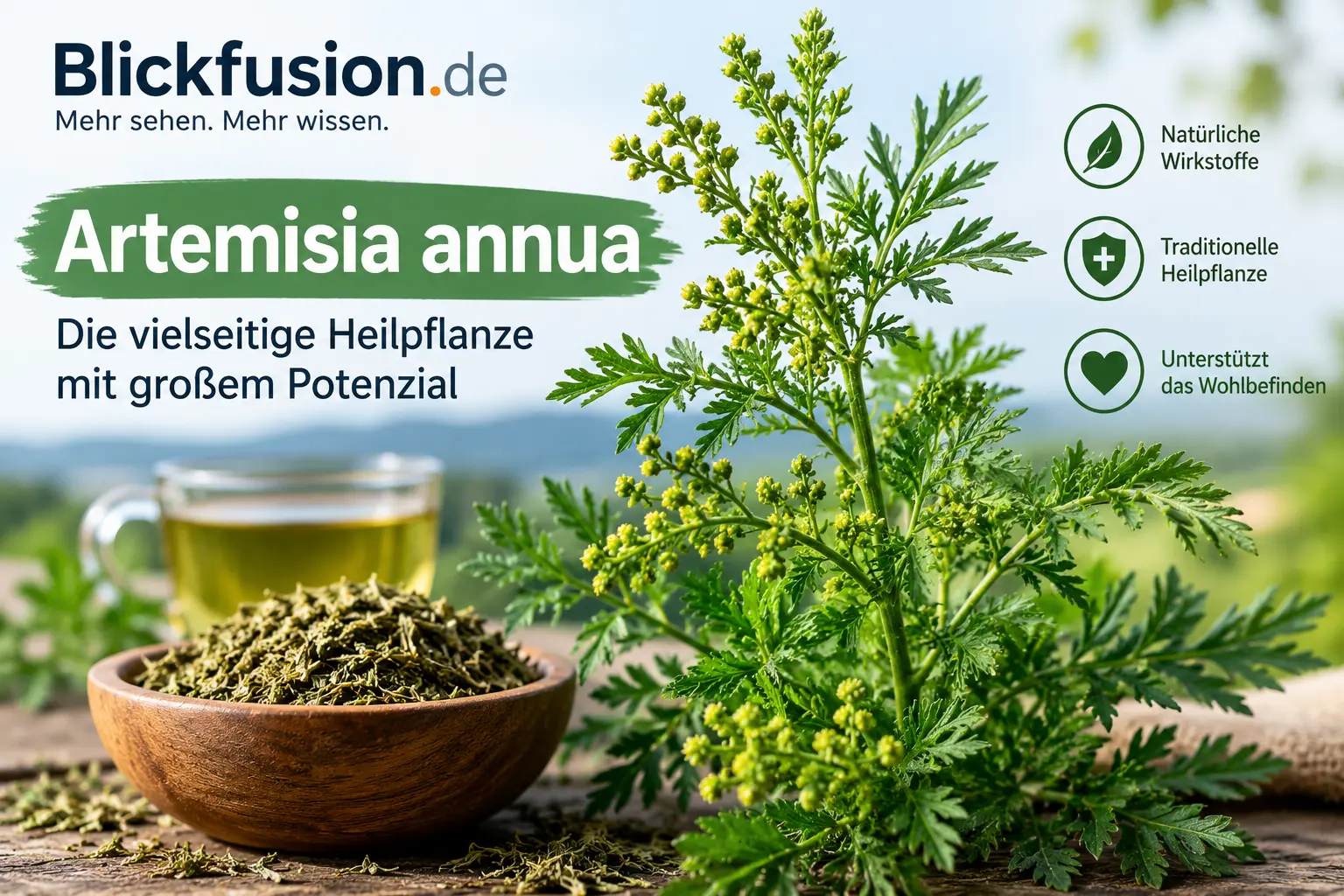
Artemisia annua is a medicinal plant that has attracted worldwide attention because it contains artemisinin, the compound that became the foundation for modern artemisinin-based malaria treatment. The plant is also known as sweet wormwood, annual wormwood, sweet Annie, and qinghao. Today, interest extends beyond malaria into phytochemistry, inflammation, antioxidant activity, infectious disease research, and experimental cancer research.
But there is an important distinction that is often missed online: Artemisia annua is the plant, while artemisinin is one of its best-known active compounds. Pharmaceutical antimalarial medicines are also not the same thing as drinking an herbal tea or taking an unstandardized plant extract.
So, what does the science actually say in 2026? Artemisia annua has a fascinating history, important pharmacological compounds, and genuine scientific value, but many claims made about herbal products go further than the available human evidence supports. This guide explains the plant from the basics to current research, safety, traditional uses, malaria treatment, product quality, and emerging areas of medicine.
Was ist Artemisia annua?
Artemisia annua is an annual flowering plant belonging to the Asteraceae family, the same broad plant family that includes daisies, chrysanthemums, and sunflowers. Its common English names include sweet wormwood, annual wormwood, and sweet Annie.
The plant is particularly famous because its leaves and flowering parts contain artemisinin, a sesquiterpene lactone that has powerful activity against Plasmodium parasites. Artemisinin and related compounds were subsequently developed into pharmaceutical medicines that transformed malaria treatment.
The plant itself should not, however, be confused with a standardized pharmaceutical preparation.
What makes this plant medically important?
Its importance comes from several different areas:
- It is a natural source of artemisinin.
- It has a long history in traditional Chinese medicine.
- It contains numerous other plant compounds, including flavonoids, terpenes, phenolic compounds, and essential oils.
- Its chemistry has been extensively investigated.
- Artemisinin derivatives form an essential component of modern antimalarial combination therapies.
- Researchers continue to investigate its compounds for possible applications beyond malaria.
The evidence is strongest for the pharmaceutical use of artemisinin derivatives against malaria. Evidence for many other proposed health benefits remains experimental or insufficient for routine medical treatment.
Herkunft und botanische Eigenschaften der Artemisia annua
The plant originated in temperate regions of Asia and is now cultivated and naturalized in many parts of the world. It is generally an annual herbaceous plant with a strong aromatic smell and finely divided leaves.
Depending on growing conditions and genetics, plants can vary considerably in height, branching, leaf shape, and chemical composition.
What does the plant look like?
Typical characteristics include:
- An upright annual growth habit
- Green, highly divided or feathery leaves
- Small yellowish-green flower heads
- An aromatic fragrance caused by volatile plant compounds
- A relatively fast growth cycle
- Production of flowers toward the later part of the growing season
The botanical name is important because several plants in the Artemisia genus have similar common names but are chemically and pharmacologically different.
For example, Artemisia vulgaris is commonly called mugwort and should not automatically be treated as the same plant. The National Center for Complementary and Integrative Health distinguishes mugwort as Artemisia vulgaris, while the plant discussed here is Artemisia annua.
Why does the plant’s chemistry vary?
Artemisinin concentration is not identical in every plant. Genetics, climate, soil, rainfall, temperature, plant age, harvesting time, drying conditions, and processing can all influence the final chemical profile.
This variation becomes especially important when discussing herbal products because a measured pharmaceutical dose cannot simply be assumed from the amount of dried plant material consumed.
Artemisia annua und ihre wichtigsten Inhaltsstoffe
The chemical composition of the plant is much broader than artemisinin alone.
Researchers have identified several groups of biologically active compounds, including:
- Artemisinin
- Artemisinic acid
- Dihydroartemisinic acid
- Flavonoids
- Phenolic compounds
- Terpenoids
- Sesquiterpenes
- Essential oils
- Coumarins
- Polyacetylenes
- Other secondary metabolites
The exact composition depends on the plant variety, growing environment, plant part, harvest timing, extraction method, and processing.
Is artemisinin the only important compound?
No. Artemisinin is the best-known compound because of its established antimalarial pharmaceutical importance, but it is only one component of the plant’s chemical profile.
Researchers are interested in whether other constituents influence biological activity through antioxidant, anti-inflammatory, antimicrobial, or other mechanisms. However, laboratory activity does not automatically mean that consuming the whole plant produces the same effect in humans.
This distinction is essential when interpreting herbal medicine research.
Artemisinin: Der bekannteste Wirkstoff der Pflanze
Artemisinin is a naturally occurring sesquiterpene lactone containing an unusual peroxide bridge. This chemical structure is central to its antimalarial activity.
The discovery of artemisinin from traditional Chinese medicine became one of the most important developments in malaria pharmacology. Artemisinin itself is not simply another herbal vitamin or general wellness compound. It is the starting point for a class of medicines that includes several semisynthetic derivatives.
Important derivatives include:
- Dihydroartemisinin
- Artesunate
- Artemether
- Arteether
These compounds have different pharmacological properties and are used in specific pharmaceutical formulations.
How does artemisinin work against malaria parasites?
The mechanism is complex, but artemisinin becomes particularly active in the environment of the malaria parasite. Its peroxide-containing structure can participate in chemical reactions that generate highly reactive intermediates, damaging essential parasite components.
The parasite’s rapid development inside red blood cells helps explain why artemisinin derivatives can act quickly against malaria parasites.
However, rapid parasite clearance does not mean artemisinin should be used alone. Modern treatment generally combines an artemisinin derivative with a longer-acting partner medicine to improve treatment effectiveness and reduce the risk of recrudescence and resistance.
Traditionelle Verwendung von Artemisia annua
The plant has a long history in traditional Chinese medicine, where it has been known as qinghao.
Historical records describe its use in traditional approaches to fever and other conditions. Its connection with malaria became particularly important in the twentieth century, eventually leading researchers to investigate its active compounds scientifically.
Traditional use is valuable from a historical and ethnobotanical perspective, but it should not automatically be interpreted as proof of effectiveness for every modern medical claim.
Why is traditional use still relevant?
Traditional medicine can provide researchers with clues about plants that deserve pharmacological investigation. In this case, historical knowledge contributed to scientific interest that eventually led to the isolation and development of artemisinin.
But modern medicine requires additional evidence, including:
- Chemical characterization
- Pharmacological studies
- Toxicology
- Standardization
- Human clinical research
- Appropriate dosing
- Quality control
- Evaluation of interactions and contraindications
This is why traditional use and clinical evidence should be discussed separately rather than treated as interchangeable concepts.
Artemisia annua bei Malaria
Malaria is a potentially life-threatening infectious disease caused by Plasmodium parasites, which are transmitted mainly through infected female Anopheles mosquitoes.
The best-known human malaria species include:
- Plasmodium falciparum
- Plasmodium vivax
- Plasmodium malariae
- Plasmodium ovale
- Plasmodium knowlesi
Artemisinin derivatives are central to modern treatment, especially through artemisinin-based combination therapies (ACTs).
The World Health Organization’s malaria guidelines were updated on 10 September 2026, with recommendations covering diagnosis, treatment, prevention, and other aspects of malaria control.
Can Artemisia annua treat malaria?
This is one of the most important questions surrounding the plant.
The plant itself should not be used as a substitute for a quality-assured antimalarial medicine.
WHO does not support the promotion or use of plant material, including teas, tablets, or capsules made from Artemisia, for preventing or treating malaria. The reasons include variable artemisinin content, uncertain dosing, insufficient exposure to eliminate parasites reliably, and concerns about resistance.
Someone with suspected malaria needs proper diagnosis and appropriate antimalarial treatment rather than relying on an herbal remedy.
WHO states that suspected malaria should generally receive parasitological confirmation through microscopy or a rapid diagnostic test where available, with prompt treatment when malaria is confirmed.
Why isn’t an herbal tea equivalent to an ACT?
An herbal tea contains a variable mixture of plant compounds. A pharmaceutical antimalarial is manufactured to deliver a defined active ingredient and dose.
The differences include:
- Standardized active ingredients
- Known dose
- Pharmaceutical manufacturing controls
- Defined pharmacokinetics
- Quality testing
- Evidence from clinical trials
- A specific combination strategy
This is one of the most important distinctions for anyone researching herbal malaria treatments.
Artemisia annua und Artemisinin im Vergleich
The easiest way to understand the relationship is:
Plant → active compounds → artemisinin → pharmaceutical derivatives → combination medicines
The plant contains artemisinin, but the pharmaceutical treatment is based on carefully manufactured medicines derived from or related to this compound.
| Plant material | Artemisinin | Artemisinin derivative | ACT |
|---|---|---|---|
| Whole botanical material | Purified active compound | Modified pharmaceutical compound | Combination of medicines |
| Chemical composition varies | Defined compound | Defined pharmaceutical ingredient | Defined combination |
| Not standardized like a medicine | Used as a drug-development compound | Used clinically | Established malaria treatment approach |
| Not recommended by WHO for malaria treatment | Part of antimalarial drug development | Used in malaria medicines | Recommended treatment strategy |
This comparison explains why statements such as “the plant cured malaria, therefore tea works like medicine” are scientifically misleading.
Mögliche gesundheitliche Wirkungen im Überblick
Research into the plant has investigated a broad range of biological activities. Some findings are promising, but they do not all have the same level of evidence.
Potential areas of interest include:
- Antimalarial activity
- Antioxidant activity
- Anti-inflammatory activity
- Antimicrobial research
- Antiparasitic research
- Cellular signaling
- Oxidative stress modulation
- Experimental anticancer activity
- Immune-related pathways
- Metabolic research
The critical question is not simply “Does it have a biological effect?”
A better question is:
“Has that effect been demonstrated in well-designed human studies at a safe and reproducible dose?”
For many proposed benefits, the answer is still uncertain.
Artemisia annua und antioxidative Eigenschaften
Oxidative stress occurs when the production of reactive molecules exceeds the body’s ability to control them through antioxidant defenses.
Plant extracts may contain compounds capable of interacting with reactive oxygen species in laboratory experiments. Flavonoids and phenolic compounds are among the constituents that have attracted interest in this context.
However, an antioxidant effect measured in a laboratory test does not automatically prove that consuming a tea or supplement will produce a meaningful antioxidant benefit in the human body.
Why is laboratory antioxidant activity not enough?
A compound must first:
- Survive digestion or otherwise reach the relevant tissue.
- Be absorbed in an effective amount.
- Reach the appropriate biological target.
- Remain active under physiological conditions.
- Produce a meaningful effect without unacceptable toxicity.
Therefore, antioxidant test results are best viewed as research findings, not as proof that a supplement prevents disease.
Artemisia annua und entzündungshemmende Forschung
Inflammation is a normal biological response that helps the body respond to injury and infection. Problems can arise when inflammatory signaling becomes excessive, prolonged, or poorly regulated.
Various compounds found in the plant have been investigated for their effects on inflammatory pathways.
Researchers have studied mechanisms involving:
- Cytokine signaling
- Oxidative stress
- Cellular inflammatory pathways
- Immune-cell responses
- Transcription factors
- Enzymatic pathways
These findings provide a basis for further research, but they should not be translated into a simple statement that the plant “treats inflammation.”
Does anti-inflammatory research prove a clinical benefit?
No.
A compound can influence an inflammatory pathway in cells while having little or no useful effect when administered to humans.
For that reason, claims about treating arthritis, autoimmune diseases, chronic inflammation, or similar conditions require appropriate human clinical evidence.
Artemisia annua in der Krebsforschung
Cancer research is one of the most discussed emerging areas involving artemisinin and related compounds.
Laboratory and animal studies have investigated possible effects involving:
- Apoptosis
- Oxidative stress
- Iron-dependent cellular processes
- Cell-cycle regulation
- Angiogenesis
- Tumor-cell metabolism
- Ferroptosis
- Cellular signaling
Recent 2026 reviews continue to describe promising experimental findings involving artemisinin and its derivatives, including research into ferroptosis, an iron-dependent form of regulated cell death.
A recent systematic review of preclinical studies specifically examining this plant and its derivatives found encouraging results in animal models, but the evidence remains preclinical rather than proof of an established cancer treatment.
Can it cure cancer?
There is currently no basis for presenting the plant or its supplements as a proven cancer cure.
This distinction matters because positive cell-culture or animal findings are not equivalent to successful cancer treatment in humans.
Cancer treatment depends on the cancer type, stage, molecular characteristics, overall health, and evidence-based treatment options. Anyone with cancer should discuss complementary products with their oncology team rather than replacing established treatment with an herbal preparation.
Weitere aktuelle Forschungsgebiete
Beyond malaria and cancer research, scientists continue to investigate the plant and its compounds in several areas.
Research has explored:
- Antibacterial activity
- Antifungal activity
- Antiparasitic mechanisms
- Viral research
- Metabolic pathways
- Neurobiological mechanisms
- Immune modulation
- Oxidative stress
- Drug-delivery systems
- Plant biotechnology
- Artemisinin biosynthesis
- Metabolic engineering
Some of these areas remain early-stage research.
Why is plant biotechnology important?
Artemisinin production is influenced by plant genetics and environmental conditions. Researchers have therefore explored cultivation optimization, breeding, tissue culture, metabolic engineering, and alternative production systems.
The goal is not simply to grow more plants. It is also to improve consistency, increase useful compound production, understand biosynthetic pathways, and support reliable pharmaceutical manufacturing.
Was sagt die wissenschaftliche Forschung zu Artemisia annua?
The scientific evidence is best understood as a hierarchy.
Stronger evidence
The strongest established medical relevance comes from artemisinin-derived pharmaceutical medicines used within appropriate antimalarial treatment strategies.
Moderate or developing evidence
Some pharmacological properties have substantial laboratory and animal research behind them, but human evidence may remain limited.
Early evidence
Potential applications in cancer, inflammation, antimicrobial activity, and other fields are still being investigated.
Insufficient evidence
A marketing claim is not evidence. Statements that a supplement can broadly detoxify the body, prevent major diseases, replace prescription medicines, or cure cancer should not be accepted without strong clinical evidence.
A recent review of the plant’s medicinal properties notes that it is the source of artemisinin and several semisynthetic derivatives, while also emphasizing that evidence from animal research cannot automatically be extended to human cancer treatment.
This evidence-based approach is particularly important for health content because readers may otherwise confuse promising research with proven therapy.
Lesen Sie unseren ausführlichen Ratgeber zum Thema Europa-Park Rust.
Artemisia annua Tee, Kapseln und Extrakte
Commercial products can appear in several forms:
- Dried leaves
- Herbal tea
- Powder
- Capsules
- Tinctures
- Liquid extracts
- Standardized extracts
- Multi-herb formulations
These products are not necessarily equivalent.
What determines the quality of an herbal extract?
Important factors include:
- Plant identity
- Plant part used
- Cultivar or genetic variety
- Harvest time
- Drying conditions
- Extraction method
- Storage conditions
- Laboratory testing
- Contamination controls
- Batch-to-batch consistency
- Declared active-compound content
Two products with the same label can therefore have substantially different chemical profiles.
Is tea the same as an artemisinin medicine?
No.
Tea preparation can extract some water-soluble and other compounds from the plant, but it does not create a pharmaceutical-grade dose of an antimalarial drug.
WHO specifically advises against using Artemisia plant material such as teas, tablets, and capsules for malaria prevention or treatment.
Sicherheit und mögliche Nebenwirkungen
Safety depends on the specific preparation, dose, duration of use, individual health status, and other medicines being taken.
Herbal products are often assumed to be harmless because they are natural. That assumption is incorrect.
Potential concerns include:
- Gastrointestinal symptoms
- Nausea
- Abdominal discomfort
- Diarrhea
- Allergic reactions
- Uncertain dose
- Contamination
- Product adulteration
- Drug interactions
- Unknown long-term effects
The safety profile of a pharmaceutical artemisinin derivative cannot simply be transferred to an unstandardized botanical supplement.
The NCCIH also emphasizes that supplement safety can be difficult to determine because manufacturers do not necessarily have to establish safety and effectiveness before products reach consumers, depending on the regulatory system.
When should someone seek medical advice?
Professional advice is particularly important if a person:
- Is pregnant or breastfeeding
- Takes prescription medication
- Has liver or kidney disease
- Has a chronic medical condition
- Has an allergy to plants in the Asteraceae family
- Is preparing for surgery
- Is being treated for cancer
- Is considering the product for malaria
- Wants to give the product to a child
Artemisia annua und mögliche Wechselwirkungen
Herbal supplements can interact with medicines in several ways.
An interaction may:
- Increase or decrease drug concentrations.
- Change how a medicine is metabolized.
- Increase adverse effects.
- Reduce treatment effectiveness.
- Affect liver enzymes.
- Influence other pharmacological pathways.
The exact interaction profile depends on the product and preparation rather than simply the plant name.
Why is it difficult to predict interactions?
A standardized pharmaceutical ingredient has a defined chemical composition. A botanical extract may contain dozens or hundreds of compounds.
This makes interaction prediction more complicated, especially when products contain multiple herbs.
Anyone taking prescription medicines should tell their physician or pharmacist about herbal supplements rather than assuming that “natural” means interaction-free.
Artemisia annua in Schwangerschaft und Stillzeit
Pregnancy requires particular caution with herbal products.
The fact that pharmaceutical artemisinin derivatives are used in malaria treatment under medical guidance does not mean that self-administering an herbal plant preparation during pregnancy is automatically safe.
Malaria itself can be dangerous during pregnancy, so suspected infection requires appropriate medical evaluation rather than self-treatment.
WHO has reviewed the safety of artemisinin-based antimalarial treatment during pregnancy and updated its recommendations based on available evidence. In particular, artemether-lumefantrine has substantial human safety data and has become an important treatment option even in early pregnancy when indicated for uncomplicated P. falciparum malaria.
That medical evidence should not be confused with evidence for taking an unstandardized herbal preparation.
What about breastfeeding?
There is not enough evidence to assume that every concentrated botanical product is safe during breastfeeding.
A breastfeeding person should discuss concentrated extracts, capsules, tinctures, or other supplements with a qualified healthcare professional before use.
Wer sollte Artemisia annua vermeiden?
Extra caution is appropriate for people who:
- Are pregnant or trying to become pregnant
- Are breastfeeding
- Take multiple prescription medicines
- Have significant liver disease
- Have significant kidney disease
- Have a history of serious herbal allergies
- Are undergoing cancer treatment
- Are taking medicines with a narrow therapeutic range
- Want to use it to treat malaria
- Want to use it instead of prescribed treatment
Children should also not be given concentrated herbal products without appropriate professional guidance.
The correct question is not simply whether the plant is “safe.” Safety depends on who is using it, which preparation is being used, how much is taken, how long it is used, and what else the person is taking.
Dosierung und Qualität von Artemisia-annua-Produkten
There is no universal, evidence-based supplement dose that can be safely recommended for every commercial product.
The concentration of active compounds can differ substantially between products and batches.
For that reason, dosage information found on social media or generic herbal websites should not automatically be treated as medically reliable.
What should consumers check?
Look for:
- Correct botanical identification
- Clear ingredient labeling
- Manufacturer information
- Batch information
- Testing for contaminants
- Appropriate storage instructions
- Clear quantity per serving
- Independent quality testing where available
- No exaggerated medical promises
A product claiming to cure malaria or cancer should be treated as a major warning sign rather than as proof of superior quality.
Artemisinin-basierte Medikamente und Kombinationstherapien
Modern malaria treatment relies heavily on artemisinin-based combination therapies, commonly abbreviated as ACTs.
An ACT combines an artemisinin derivative with another antimalarial drug that has a different pharmacological role and generally lasts longer in the body.
Examples include combinations such as:
- Artemether-lumefantrine
- Artesunate-amodiaquine
- Artesunate-mefloquine
- Artesunate-sulfadoxine-pyrimethamine
The exact recommended medicine depends on the malaria species, geographic resistance patterns, disease severity, patient characteristics, and national or international treatment guidelines.
Why combine two medicines?
Using a combination helps ensure that parasites exposed to the rapidly acting artemisinin component are also exposed to a partner medicine with a different mechanism and longer activity.
This is fundamentally different from using a plant preparation with an unpredictable amount of active compound.
WHO describes ACTs as combinations containing an artemisinin derivative and a partner drug and recommends quality-assured treatment rather than non-pharmaceutical plant material for malaria.
Artemisinin-Resistenz und ihre Bedeutung 2026
Antimalarial drug resistance is one of the most important current issues in malaria control.
Partial resistance to artemisinin derivatives has been documented or suspected in several African countries, adding pressure to malaria-control programs. WHO’s World Malaria Report 2025 highlighted confirmed or suspected partial resistance in at least eight African countries.
How can resistance develop?
When parasites are repeatedly exposed to drug concentrations that do not fully eliminate them, susceptible parasites may be removed while less-sensitive parasites survive and reproduce.
This is one reason inappropriate use of antimalarial medicines is dangerous.
WHO also warns that widespread use of non-pharmaceutical plant material could contribute to resistance because the amount of artemisinin may be insufficient or inconsistent.
Why does resistance matter to ordinary patients?
Resistance can mean:
- Treatment becomes less effective.
- Parasites may take longer to clear.
- Alternative medicines may become more important.
- Public-health programs face greater costs.
- Transmission control becomes more difficult.
- New drug combinations may be needed.
This makes proper diagnosis and quality-assured treatment especially important in 2026.
Qualität, Ernte und Verarbeitung der Pflanze
Plant chemistry begins before the plant reaches a consumer.
Factors affecting phytochemical content include:
- Genetics
- Soil
- Climate
- Water availability
- Temperature
- Plant maturity
- Harvest timing
- Drying
- Storage
- Processing
- Extraction technique
Artemisinin production is particularly sensitive to biological and environmental variation.
Why does harvesting matter?
The concentration of valuable compounds can change during plant development. Researchers and growers therefore study the relationship between plant growth stage and active-compound concentration to identify appropriate harvesting conditions.
After harvesting, improper drying or storage can also affect the chemical profile and overall quality.
For pharmaceutical production, these variables are controlled far more tightly than they are for ordinary herbal material.
Artemisia annua selbst anbauen: Das sollte man wissen
Growing the plant at home is possible in suitable climates, but growing a plant successfully does not mean producing a predictable medicinal product.
Basic cultivation considerations include:
- Adequate sunlight
- Well-drained soil
- Appropriate moisture
- Sufficient growing space
- Protection from severe environmental stress
- Correct identification of the plant
- Appropriate harvesting and drying
The plant can become relatively large, so spacing matters.
Does home cultivation guarantee high artemisinin content?
No.
Two plants can look similar while having different chemical profiles.
Artemisinin concentration depends on genetics and environmental conditions, among other factors. Without laboratory analysis, a home grower cannot reliably determine the exact concentration of artemisinin in dried leaves.
This is another reason why home-grown plant material should not be considered equivalent to a standardized antimalarial medicine.
Woran erkennt man hochwertige Artemisia-annua-Produkte?
A trustworthy herbal product should provide enough information for consumers to understand exactly what they are buying.
Useful quality indicators include:
- Full botanical name
- Plant part used
- Extract ratio or standardized content where applicable
- Ingredient list
- Batch or lot number
- Expiry information
- Manufacturer details
- Storage instructions
- Testing information
- Transparent labeling
Be cautious when a product:
- Promises to cure multiple serious diseases.
- Gives dramatic results without evidence.
- Hides the amount of active ingredients.
- Uses vague proprietary blends.
- Provides no manufacturer information.
- Claims to replace antimalarial treatment.
- Claims to cure cancer without clinical evidence.
A professional appearance on a label is not the same as scientific validation.
Was die Forschung 2026 über Artemisia annua zeigt
The 2026 evidence picture is nuanced.
The plant remains scientifically important because it is the natural source associated with artemisinin, which led to the development of highly important antimalarial medicines.
At the same time, researchers continue to investigate additional biological properties.
Recent research has particularly examined the anticancer potential of artemisinin and related compounds. A 2026 systematic review of artemisinin and its derivatives discussed ferroptosis and other mechanisms in cancer research, while emphasizing that much of the evidence remains experimental.
Another recent review of anticancer research involving Artemisia species described promising laboratory and preclinical mechanisms while noting challenges such as resistance, bioavailability, and translation into clinical treatment.
The practical takeaway is simple:
There is genuine scientific potential, but potential is not the same as proven clinical effectiveness.
For malaria, pharmaceutical artemisinin derivatives remain highly important. For other conditions, research is still developing and should not be presented as established treatment.
The latest WHO malaria guidance, updated in September 2026, also reinforces the importance of evidence-based diagnosis and treatment rather than substituting herbal plant material for recommended antimalarial medicines.
Häufig gestellte Fragen
What is Artemisia annua?
It is an annual herb belonging to the Asteraceae family and is widely known as sweet wormwood or annual wormwood. It is especially important because it contains artemisinin, a compound used as the basis for several modern antimalarial medicines.
What is Artemisia annua commonly called?
Common names include sweet wormwood, annual wormwood, sweet Annie, and qinghao. Botanical names are more reliable than common names because different plants can share similar names.
What is artemisinin?
Artemisinin is a naturally occurring sesquiterpene lactone found in the plant. It has potent activity against malaria parasites and has been developed into several pharmaceutical derivatives.
Is Artemisia annua the same as artemisinin?
No. The former is the whole plant, while the latter is a specific active compound found in the plant.
Can Artemisia annua cure malaria?
The plant should not be relied upon to treat malaria. WHO does not support using teas, tablets, capsules, or other non-pharmaceutical plant material for malaria prevention or treatment because of variable content, uncertain dosing, inadequate parasite clearance, and resistance concerns.
Is artemisinin used in modern malaria medicine?
Yes. Artemisinin derivatives are important components of artemisinin-based combination therapies used to treat malaria.
Why are artemisinin medicines combined with another drug?
The combination provides complementary antimalarial activity and helps reduce the risk that surviving parasites will continue multiplying after the rapidly acting artemisinin component has been cleared.
Can you drink Artemisia annua tea?
People may encounter the plant as herbal tea, but drinking it is not equivalent to taking a standardized pharmaceutical medicine. It should not be used as a substitute for malaria treatment.
Does Artemisia annua have antioxidant properties?
Laboratory research suggests that compounds in the plant can show antioxidant-related activity. However, laboratory antioxidant activity does not prove that consuming the plant provides a clinically meaningful antioxidant effect in humans.
Does Artemisia annua reduce inflammation?
Several compounds have been investigated for effects on inflammatory pathways. However, evidence from laboratory studies does not establish the plant as a proven treatment for inflammatory diseases.
Can Artemisia annua treat cancer?
Current research does not establish the plant or its supplements as a proven cancer treatment. Artemisinin and related compounds have shown interesting anticancer effects in laboratory and animal studies, but much more clinical evidence is needed.
Is Artemisia annua safe?
Safety depends on the preparation, dose, duration, individual health status, and other medicines being taken. The safety of an unstandardized herbal product should not automatically be assumed from the established medical use of pharmaceutical artemisinin derivatives.
Can it be used during pregnancy?
Self-treatment with herbal preparations during pregnancy is not advisable without professional guidance. Medical treatment for malaria during pregnancy is a separate issue and should follow current clinical guidelines.
Can children take Artemisia annua supplements?
Children should not be given concentrated herbal supplements without appropriate professional advice. Dosing and safety cannot be assumed from adult use.
Does growing the plant at home make it medicinally standardized?
No. Home cultivation does not guarantee a predictable artemisinin concentration. Genetics, growing conditions, harvesting, drying, and processing can all affect chemical composition.
What is the difference between an herbal extract and an ACT?
An herbal extract contains a mixture of plant compounds, while an ACT is a standardized pharmaceutical combination containing a defined artemisinin derivative and partner antimalarial drug.
Why is artemisinin resistance important in 2026?
Partial resistance to artemisinin derivatives has become a significant malaria-control concern, including confirmed or suspected resistance in multiple African countries. Preserving the effectiveness of antimalarial medicines therefore requires appropriate diagnosis, quality-assured treatment, and responsible medicine use.
What should someone do if they suspect malaria?
They should seek medical care promptly for appropriate testing and treatment. Malaria can become life-threatening, and an herbal product should not delay diagnosis or effective antimalarial therapy.
Fazit
Artemisia annua is much more than an ordinary medicinal herb. Its historical importance, distinctive chemistry, and role as the natural source of artemisinin have made it one of the most significant medicinal plants studied in modern pharmacology.
Its strongest established medical relevance comes from the development of artemisinin derivatives and artemisinin-based combination therapies for malaria. That pharmaceutical achievement should not be confused with evidence that raw leaves, teas, capsules, or unstandardized extracts can replace modern malaria medicines.
Research into antioxidant, anti-inflammatory, antimicrobial, and anticancer properties remains scientifically interesting. In particular, 2026 research continues to investigate artemisinin-related mechanisms such as oxidative stress, apoptosis, and ferroptosis. Yet promising laboratory or animal findings still need appropriate human clinical evidence before they can become established treatments.
For consumers, the most important lessons are straightforward: understand the difference between the plant and its purified compounds, treat herbal products as biologically active rather than automatically harmless, check product quality, consider potential interactions, and never use an unproven botanical product as a substitute for treatment of a serious disease.
In short, the science surrounding this plant is genuinely promising in some areas, firmly established in others, and still uncertain in many more. Keeping those evidence levels separate is the safest and most accurate way to understand its place in modern health research.
Lesen Sie unseren ausführlichen Ratgeber zum Thema FOM Online Campus.